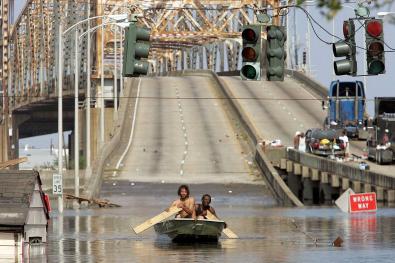
A few weeks ago, I wrote a blog about knowledge and tragedy. This post detailed issues of bounded awareness and trust issues during times of disaster. Mary also discussed trust during emergencies. We often think of the failure of individuals or systems during a tragedy or a botched disaster response. These failures happen, of course, but are there other factors involved?
 Jones and Mahon (2012) detail the environment as a clear factor in knowledge management. These researchers describe high velocity, turbulent, and stable environments and how the inherent characteristics of these may hinder effective knowledge management practices. Jones and Mahon (2012) reiterate that decisions made in real time may have life or death consequences (e.g., military combat knowledge management). They describe the battlefield as a high-velocity situation, which is often short-lived; knowledge results from pattern-recognition across individual cases. Reflection on what happened occurs afterward when there is time to do so. Conversely, turbulent environments are long-lived with significant changes in communication among involved parties. Stable environments are low-pressure, with challenges occurring in communication and complacency when the environment shifts to turbulent or high-velocity. In a stable environment, complacency may cause something similar to bounded awareness. Regardless of success with standard operating procedures, we must recognize that conditions may change, and we must anticipate these changes (e.g., strategic planning, communication plans). Tacit and explicit knowledge are both critical in these environments, especially in high-velocity situations. In the face of tough circumstances, how do we transfer critical tacit knowledge quickly and effectively?
 In response to this question, Jones and Mahon (2012) created a model that includes the fundamental aspects of preparing for unstable environments. They highlight appropriate considerations for those preparing for such situations including (1) developing strategic communication plans, (2) considering organizational culture, (3) providing proper training to help people deal with ambiguity, (4) having access to appropriate technologies (e.g., social networks, databases), and (5) developing a central command area within the organizational structure that facilitates knowledge sharing and transfer. Together, these elements help organizations prepare for effective practice in the face of adversity, as Raphael recently discussed.
An interesting aspect of this model is the access to technologies. What happens when an organization doesn’t have access to the information needed? What if the organization doesn’t have the tools and resources necessary to create the information needed for an effective response to changing environments?
Lam and Chua (2009) discuss knowledge outsourcing as a response to these issues. Knowledge outsourcing is when organizations contract external entities for their expertise. They identify favorable conditions for knowledge outsourcing (e.g., lack of in-house experts) but also examine the risks. First, organizations must be able to identify their knowledge needs. Second, knowledge sourcing must occur. This process is challenging in that it requires finding qualified outlets to produce knowledge that have the time and resources to get the job done. The an organization must negotiate knowledge services, ensure timely and adequate knowledge delivery, and monitor the contracted services over time. Moreover, utilizing knowledge may bring challenges due to the appropriateness of the knowledge. This is especially important in high-velocity and/or turbulent environments. What good is knowledge if it cannot be used in changing environments?
 To illustrate these potential issues, think about an organization contracting an outside entity to construct a crisis response plan to anticipate a potential change in environment (i.e., stable to turbulent). This is a common practice, yet I think the focus is on explicit knowledge rather than tacit. Because of this, organizational members should be contributing to planning – engaging in a form of knowledge insourcing (Lam & Chua, 2009). I think this practice will also contribute to other dimensions of Jones and Mahon’s (2012) model such as developing strategic communication plans and considering organizational culture. In sum, for optimal knowledge management, organizations must consider individuals, systems, and environments.
References
Jones, N. B. & Mahon, J. F. (2012) Nimble knowledge transfer in high velocity/turbulent environments. Journal of Knowledge Management, 16(5), 774-788. doi:10.1108/13673271211262808
Lam, W., & Chua, A. Y. (2009). Knowledge outsourcing: An alternative strategy for knowledge management. Journal of Knowledge Management, 13(3), 28-43. doi:10.1108/13673270910962851
 There are many ways that COP may be defined. Amin and Roberts (2008) take issue with how researchers have conceptualized COP, saying that “the use of the term (COP) has become imprecise, having strayed far from the original definition of COPs as relatively stable communities of face-to-face interaction between members working in close proximity to one another, in which identity formation through participation and the negotiation of meaning are central to learning and knowledge generation”(p. 355). In my research, I use Hara’s (2009) definition that defines COP as “collaborative, informal networks that support professional practitioners in their efforts to develop shared understandings and engage in work-relevant knowledge building” (p. 3). Similar to Hara (2009), Amin and Roberts (2008) focus on innovation and the creation of knowledge. Additionally, they detail the knowledge acquisition, nature of social interaction, innovation, and organizational dynamic of professional knowing in action. These dimensions are inextricably linked and vital to the way we work to acquire, create, and disseminate knowledge to interested publics. That said, what happens when a project is complete? Our tacit and explicit knowledge carries with us to the next task, project, team, and so forth. Perhaps what we learn from our experiences in COP is the most significant element of our work.
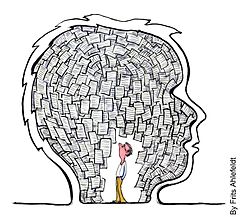
 The reticence for collaboration among individuals involved in COP may lend to Huber’s (1991) of unlearning, which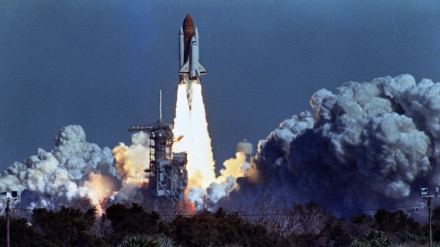
 Tsoukas (2001) characterizes organizations by their concrete settings, abstract rules, and historical communities. I want to emphasize community within this characterization in this post. In past blogs, I have described the importance of the individual in creating productive communities of knowledge. I maintain this view as I read of organizational stories, which include the narratives of employees and their managers and the subsequent interactions that take place (Colon-Aguirre, 2015). Talk about the importance of stories is crucial as the cultural knowledge within an organization is “central to the organization’s own existence” (Colon-Aguirre, 2015, p. 431).

 Knowledge transfer is inherent in many of the above categories and dimensions of social and intellectual capital. Knowledge transfer “is the process through which one unit (e.g., group, department, or division) is affected by the experience of another.” ( Argote & Ingram, 2000, p. 151). As we know, knowledge is anchored in many organizational functions including its tools, technology, tasks, relationships, and networks. The embedded nature of knowledge affects the way it is transferred to organizations including (1) characteristics of the source of knowledge, the recipient, the context, and the knowledge itself, (2) causal ambiguity, (3) the characteristics of individual members (i.e., ability and motivation), and (4) the strong and weak ties in social networks.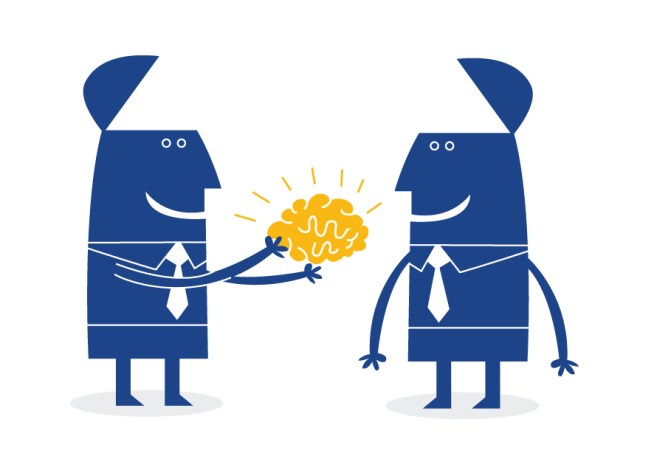


 hereticalpoetical