“For a scientist, this is a good way to live and die, maybe an ideal way for any of us– excitedly finding we were wrong and excitedly waiting for tomorrow to come so we can start over.” (Maclean, 1992, p. 139)
When people ask me what I do, I tell them that I am a Ph.D. and MPH student studying Health Communication and Health Management and Policy. I often get confused looks and have to dive deeper into explaining my research, which only sometimes brings clarity the conversation. Generally speaking, I talk about my job as an instructor, which usually resonates a bit more. I even have a family member who refers to me as “The Professor,” and I have not corrected him because I like the way it sounds. As much as I love teaching, my research is what drives me to keep going through the labyrinth that is graduate school. As an undergraduate, theory and research existed on paper as a study guide for good marks on exams. Somewhere along the line, this all changed. In an unusual turn of events, I went from an over-achieving undergraduate student to a barely-achieving researcher. As a young scholar, intellectual curiosity is both a gift and a curse – I am filled with ideas yet frightened by failure. That said, I know from the sage advice from those who have gone before me that this feeling is natural and, unfortunately, never goes away.

I will continually encounter challenges of finding determinants and results and the linkages between them, and, perhaps most importantly, I must find ways to express why these are important to my field and to science (Zetterburg, 1965). Ideas are often only as good as the paper on which they are printed, which leads me to describe where I get my ideas from, discuss the problems that obsess me, and make a case for the why these ideas are important.
Personal experience is a primary driver of my interest in health communication. My family suffers a host of health issues, and I have lost too many family members to cancer. In my first undergraduate health communication class, I realized that there were evidence-based strategies to counter many different health issues among myriad populations. I began to consider how I may conduct unique research based on my experience of living in a rural area that is disproportionately affected by health disparities. For example, my thesis centered on the memorable messages about nutrition recalled by Appalachian adolescents. Listening to these children describe their lived experiences helped me to understand the unique challenges they face when making nutritional decisions and that eating “healthy” means something entirely different to them than it does to you and me. This type of research helps to better understand how communication influences nutritional behaviors and decision-making, which may inform culturally appropriate interventions and campaigns.
My personal experience was one of the compelling reasons behind my decision to go to graduate school. Not just that I had incredible undergraduate professors and mentors with whom I shared the passion of educating others, but also that they had given me something I had longed for years before. My first college experience was not ideal as I was intellectually and emotionally unprepared. I struggled greatly and ended up dropping out. This, in part, was likely because I did not have instructors who took an interest in me – I was just another face in the crowd. Now that I am an instructor, I want my students to master content (and hopefully learn how theory is pragmatic), but also to know that there is at least one person in their corner who understands what it is like to fail and recognizes that failure is often only the beginning. Each semester, I encounter students from all walks of life, who often face challenges similar to my own, which drives my interest in the ways that the instructor-student relationship may help students to achieve academic and personal success. Currently, I am leading a research project aimed at discovering the ways students’ sensitive self-disclosures affect both the student and the instructor. Reading the accounts of others in our qualitative findings give me hope that my research may shape positive communication practices among students and instructors. Ideally, this type of research may improve instructor-student relationships and contribute to better university policies for dealing with sensitive student issues.

Listening to and reading the accounts of others is also a source of my ideas as a communication scholar. My advisor, Dr. Elisia Cohen, once said, “every problem is a communication problem,” and I believe this to be true. Recently, I have become interested in the lived experiences of medical students, which I became acquainted with through my friends who are pursuing medical careers. I often listen as they detail the challenges they face, which most often are communication-based. Because of the stories of friends, I often search for the narratives of others, such as Poorman’s (2016) account of the “powerful culture of fear, stigma and lack of self-care that prevents [medical] residents from seeking help” managing their emotions (para. 8). These stories contribute to my unrelenting curiosity of how improved communication practices can make a difference in the lives of medical residents charged with caring for an ailing population.

Another driver of my ideas is thinking about where things went wrong, especially in public health crises. Often, public health professionals focus on education and access issues, which are key pieces of the puzzle. However, a systematic understanding of how communication may shape education, access, and policy is my primary interest. Recently, I conducted an analysis of the Indiana State Department of Health’s response to an intravenous drug use-driven HIV outbreak in Austin, Indiana. In dissecting the press releases during the height of the outbreak, I discovered exemplars that may help to inform other public health efforts necessary for similar situations. Analyzing the communication among the enormous number of entities (including now VP Pence) involved in these efforts may help to improve communication during crises. Moreover, this project stimulated my thinking about the ways these practices may apply in my hometown, which experiences issues with drug use similar to that of Austin.
In sum, many issues “obsess” me. So much so, that I often struggle with choosing my research foci. I am excited to continue my research, and I recognize that I must fail in order to succeed. As a young scholar, I take solace in knowing that failure is only the beginning.


 hout many of our discussions this semester, we have talked about how people are reticent to change. In the context of managing my references, I have to say that I am guilty. In the past, I have tried to adopt several reference management technologies, but for whatever reason, I turn into Oscar the Grouch when navigating these systems. I think that this is just me being overwhelmed in the face of new knowledge AND a new way to manage this knowledge. I have an existing knowledge management system that is an amalgamation of Dropbox and OneNote technologies. Surprisingly enough, I can search and reference effectively, but I remain unconvinced this is the most efficient process.
 I have frequently referred to communities of practice in many of my blogs because these are a gold-standard of sorts for effective academic research teams. However, there are clear differences between communities of practice and networks of practice. An electronic network of practice is much larger, more loosely knit, and often geographically distributed – the most significant difference is that in networks of practice, contributors are often strangers who may never expect to meet face-to-face (Brown & Duguid, 2001 ). An example of this is Wikipedia, where experts (
 Motivation plays an important role in the decision-making contribute to this type of knowledge network (Wasko & Faraj, 2005). In thinking about reasons why I would potentially contribute to an electronic network of practice, I stumbled upon a wiki dedicated to information sharing in partnership with the

 Jones and Mahon (2012) detail the environment as a clear factor in knowledge management. These researchers describe high velocity, turbulent, and stable environments and how the inherent characteristics of these may hinder effective knowledge management practices. Jones and Mahon (2012) reiterate that decisions made in real time may have life or death consequences (e.g., military combat knowledge management). They describe the battlefield as a high-velocity situation, which is often short-lived; knowledge results from pattern-recognition across individual cases. Reflection on what happened occurs afterward when there is time to do so. Conversely, turbulent environments are long-lived with significant changes in communication among involved parties. Stable environments are low-pressure, with challenges occurring in communication and complacency when the environment shifts to turbulent or high-velocity. In a stable environment, complacency may cause something similar to bounded awareness. Regardless of success with standard operating procedures, we must recognize that conditions may change, and we must anticipate these changes (e.g., strategic planning, communication plans). Tacit and explicit knowledge are both critical in these environments, especially in high-velocity situations. In the face of tough circumstances, how do we transfer critical tacit knowledge quickly and effectively?
 In response to this question, Jones and Mahon (2012) created a model that includes the fundamental aspects of preparing for unstable environments. They highlight appropriate considerations for those preparing for such situations including (1) developing strategic communication plans, (2) considering organizational culture, (3) providing proper training to help people deal with ambiguity, (4) having access to appropriate technologies (e.g., social networks, databases), and (5) developing a central command area within the organizational structure that facilitates knowledge sharing and transfer. Together, these elements help organizations prepare for effective practice in the face of adversity, as
  To illustrate these potential issues, think about an organization contracting an outside entity to construct a crisis response plan to anticipate a potential change in environment (i.e., stable to turbulent). This is a common practice, yet I think the focus is on explicit knowledge rather than tacit. Because of this, organizational members should be contributing to planning – engaging in a form of knowledge insourcing (Lam & Chua, 2009). I think this practice will also contribute to other dimensions of Jones and Mahon’s (2012) model such as developing strategic communication plans and considering organizational culture. In sum, for optimal knowledge management, organizations must consider individuals, systems, and environments.
 There are many ways that COP may be defined. Amin and Roberts (2008) take issue with how researchers have conceptualized COP, saying that “the use of the term (COP) has become imprecise, having strayed far from the original definition of COPs as relatively stable communities of face-to-face interaction between members working in close proximity to one another, in which identity formation through participation and the negotiation of meaning are central to learning and knowledge generation”(p. 355). In my research, I use Hara’s (2009) definition that defines COP as “collaborative, informal networks that support professional practitioners in their efforts to develop shared understandings and engage in work-relevant knowledge building” (p. 3). Similar to Hara (2009), Amin and Roberts (2008) focus on innovation and the creation of knowledge. Additionally, they detail the knowledge acquisition, nature of social interaction, innovation, and organizational dynamic of professional knowing in action. These dimensions are inextricably linked and vital to the way we work to acquire, create, and disseminate knowledge to interested publics. That said, what happens when a project is complete? Our tacit and explicit knowledge carries with us to the next task, project, team, and so forth. Perhaps what we learn from our experiences in COP is the most significant element of our work.
 The reticence for collaboration among individuals involved in COP may lend to Huber’s (1991) of unlearning, which
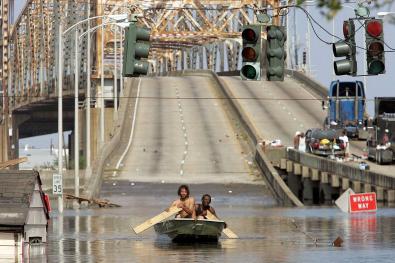


 Tsoukas (2001) characterizes organizations by their concrete settings, abstract rules, and historical communities. I want to emphasize community within this characterization in this post. In past blogs, I have described the importance of the individual in creating productive communities of knowledge. I maintain this view as I read of organizational stories, which include the narratives of employees and their managers and the subsequent interactions that take place (Colon-Aguirre, 2015). Talk about the importance of stories is crucial as the cultural knowledge within an organization is “central to the organization’s own existence” (Colon-Aguirre, 2015, p. 431).

 Knowledge transfer is inherent in many of the above categories and dimensions of social and intellectual capital. Knowledge transfer “is the process through which one unit (e.g., group, department, or division) is affected by the experience of another.” ( Argote & Ingram, 2000, p. 151). As we know, knowledge is anchored in many organizational functions including its tools, technology, tasks, relationships, and networks. The embedded nature of knowledge affects the way it is transferred to organizations including (1) characteristics of the source of knowledge, the recipient, the context, and the knowledge itself, (2) causal ambiguity, (3) the characteristics of individual members (i.e., ability and motivation), and (4) the strong and weak ties in social networks.
 hereticalpoetical